More information?
Contact us:+31 413 382633
info@nutricontrol.nl
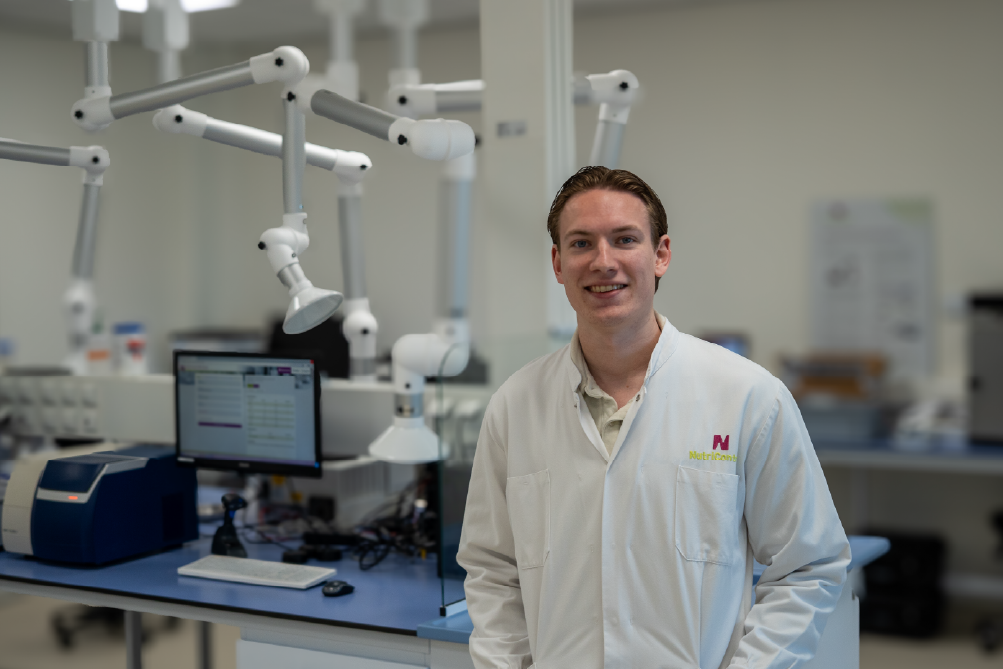
You recently started as a Data Analyst at NutriControl. What appealed to you about this role, and what made you choose a laboratory environment?
Because of my background in chemistry (Food & Pharma) and my growing interest in data, I was looking for a role in which I could combine the two. That combination of a laboratory environment and a data role was exactly what I was looking for. In this Data Analyst role at NutriControl, those two areas come together very well.
What specifically fascinates you about NIR technology, and how do you see the role of this technique within modern quality control and data analysis?
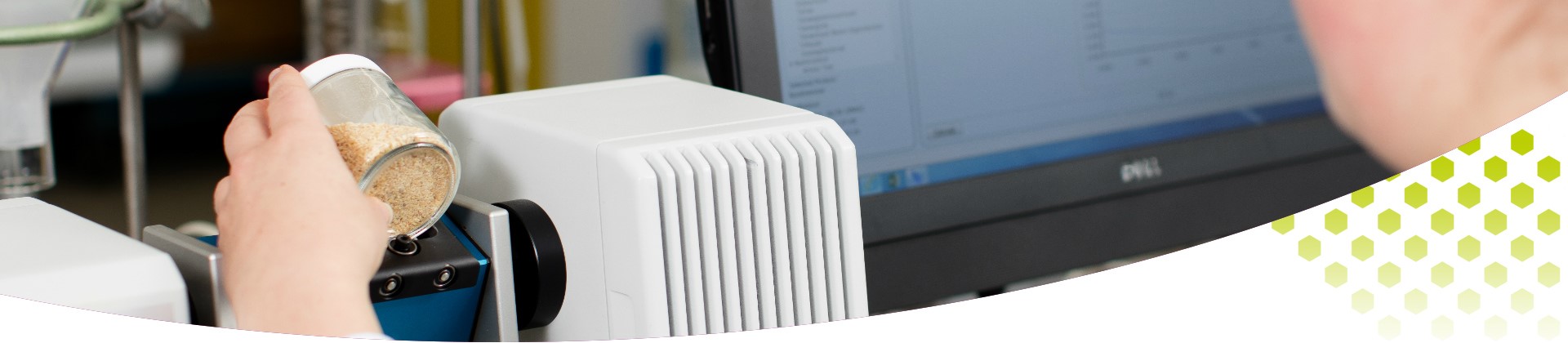
What makes NIR so special is that it is an accessible technique: a measurement takes little time, you do not need any chemicals and it is not expensive. At the same time, it can really help companies gain control over the quality of their products. For me as a Data Analyst, it is even more interesting because the technique also generates a lot of data, and there is always something new to discover in that.
You have experience with tools such as Power BI and data analysis. What do you find interesting about working with data, and how do you translate raw measurement data into useful insights for customers?
What I enjoy about working with data is that you can turn it into something that is genuinely useful to people. After all, every company has data, but the real value lies in what you do with it. The team I am part of is very actively involved in this, not only for our own department but also for the rest of the company. As a result, you work with many different types of data, which makes it even more enjoyable.
What makes the new NIR calibration model for oat hulls unique compared to existing analysis methods?
With NIR, you can obtain an extensive profile of the composition of your sample within just a few minutes, including the amount of crude fibre and moisture in the sample. By further developing our calibration model for oat by-products into a specific calibration model for oat hulls, we can make the predictions of these values even more accurate.
Which parameters can we reliably predict with this calibration model, and how do they compare to traditional laboratory analyses?
Crude fibre, moisture, crude protein, crude fat, starch (Ewers) and crude ash. These are parameters that take hours to days to determine using traditional wet chemical analysis. That type of analysis will often be more accurate, but NIR quickly provides a broad picture of your sample.
For which practical applications is this calibration model most relevant?
Oat hulls are used as a raw material for animal feed, as a source of fibre. With an NIR measurement, the quality of the oat hulls can be checked and it can be determined in what ratio the oat hulls should be mixed into the feed.